For Most Situations, Yes
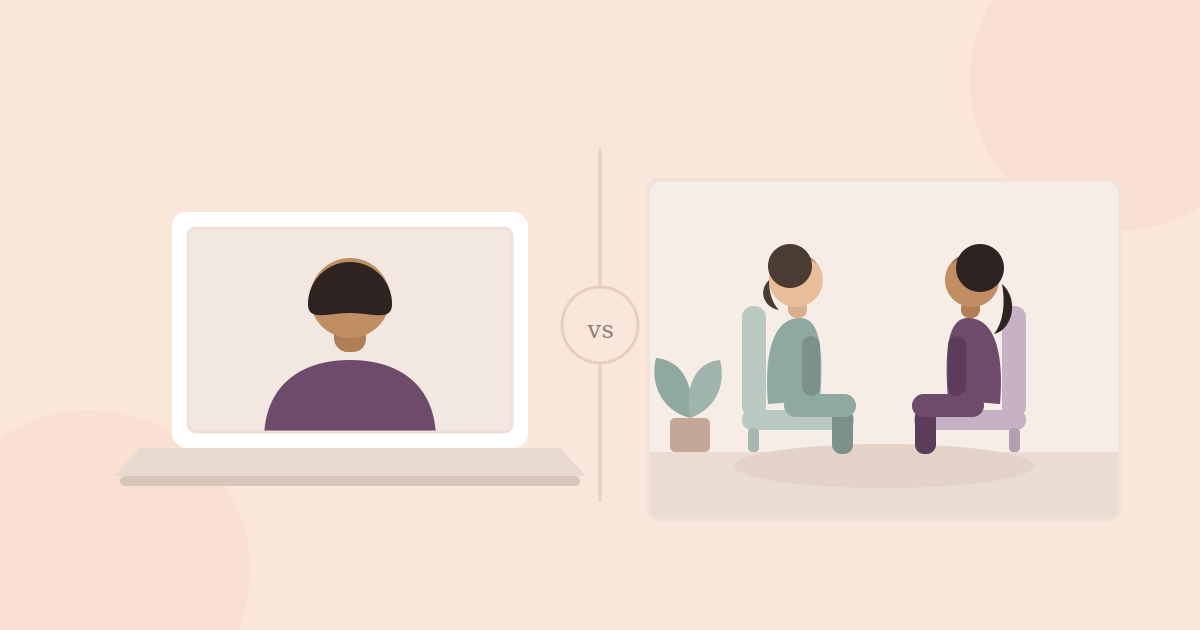
For most of what people bring to therapy, research finds online sessions produce outcomes comparable to in-person care. That’s held up across studies of depression, anxiety, and trauma treatment, including structured protocols like cognitive processing therapy delivered over video. Research consistently shows the connection, the progress, and the support are all still there. You’ll still see the therapists’ face, still build real rapport, and the work you do together is just as meaningful. The relationship between the patient and therapist, which predicts outcomes more than almost anything else, forms about as well on screen as in a room. Some people find it easier to speak openly from their own space, and you get back the drive time, the waiting room, and the hour off work.
However, online therapy isn’t right for everything. Active substance withdrawal, a psychiatric emergency, or a situation needing in-person medical monitoring all call for a different level of care. Online therapy also depends on having somewhere private to talk, which is a real obstacle in some households. If that’s your situation, it’s worth mentioning it in the consultation rather than working around it.

Online Therapy is Easily Accessible
All You Need Is:
- A private space where you feel comfortable talking
- A phone, tablet, or computer
- A stable internet connection
- That’s it. No special software to figure out, no complicated setup.
And It Fits Your Life
Another huge benefit of online therapy is that it fits your life. Whether you’re managing a demanding job, caring for family, or simply trying to protect what little downtime you have, online therapy meets you where you are, literally. Session from your couch after the kids are asleep. On your lunch break. Wherever gives you privacy and a quiet moment.
Other benefits of online therapy
Access isn’t limited by what’s within driving distance
The biggest practical change online therapy made is that your options are no longer set by your zip code. If you live in a rural county, a small town, or anywhere the nearest practice has a three-month waitlist, in-person care means taking whoever is available. Online, you’re choosing from clinicians across the state, and for psychologists working under PSYPACT, across more than 40 states.
That matters most when your situation isn’t generic. Chronic pain, medical trauma, a rare diagnosis, or a treatment approach you specifically want are all things a nearby generalist may not have worked with much. There’s a real difference between a therapist who is sympathetic about chronic pain and one who has spent years treating it, and geography shouldn’t be what decides which you get.
It also removes the quiet barrier of logistics. If a session costs you 90 minutes of driving on top of the hour itself, therapy competes with work, childcare, and a body that may not tolerate the drive. Plenty of people don’t quit therapy because it stopped helping. They quit because getting there became one more thing they couldn’t manage.
You can work with someone who specializes in exactly what you’re dealing with
Most therapists are generalists, and good ones. But some problems respond much better to specific training. Cognitive processing therapy for trauma, CBT for insomnia, and pain-focused approaches to chronic illness are structured protocols, and the results depend on the clinician actually knowing them.
In person, you’re limited to whoever within driving distance happens to have that training. In a mid-sized town, that may be no one. Online, specialization stops being a lucky coincidence and becomes something you can look for.
This matters especially if you’ve tried therapy before and it didn’t help. A common reason isn’t that therapy doesn’t work for you. It’s that the approach didn’t fit the problem. Talk therapy aimed at insight can be genuinely useless for insomnia, which often responds in six to eight sessions of a structured protocol instead. Being able to find the right fit rather than the nearest one is worth more than most people realize.
Nobody has to see you walk into a therapist’s office
This isn’t a small thing, and I’ve stopped treating it as one. In a small town, the waiting room is sometimes the whole problem. People worry about a neighbor in the parking lot, a coworker in the elevator, a car recognized outside a building everyone knows. That worry keeps people out of therapy for years.
Online, the session happens in your own space. There’s no building to be seen entering and no waiting room where you might run into someone. For people whose work depends on being seen as steady, like teachers, clergy, physicians, first responders, or anyone in a small professional community, that privacy can be the deciding factor.
I want to be clear that the stigma itself is the problem, not you for feeling it. But you don’t have to wait for your community’s attitudes to change before getting help. Removing the visibility problem removes one real obstacle now.
You’re not limited to the rates in your area
Therapy costs vary a lot by market. Rates in New York, LA, or Dallas run meaningfully higher than in smaller cities, because those practices carry the overhead of offices in expensive places. When you can only see someone within driving distance, you pay whatever your local market charges.
Online, you’re choosing from a wider range of practices with a wider range of costs. A clinician without a downtown lease has a different cost structure, and that often shows up in what they charge.
There are savings on your side too, and they add up more than people expect: no drive, no parking, no gas, and often no need to take a half day off work for a one-hour appointment. Someone paying $40 in parking and losing three hours of work for each in-person session is paying considerably more than the rate on the website.
One thing worth checking regardless: insurance covers telehealth at the same rate as in-person for most plans, so the question that usually matters more than the sticker price is what your benefits actually are.